
At AKA Case Management, safeguarding is not a standalone obligation; it’s a fundamental part of how we deliver safe, effective and accountable support to the individuals and families we work with.
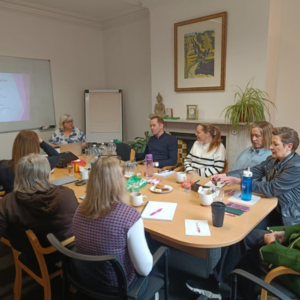
In March, our entire team undertook Level 3 safeguarding training for adults and children. To ensure the training was accessible to all, we delivered an online session for colleagues who were unable to travel to Nottingham. The week after, we held a face-to-face training day at our HQ, enabling full engagement across all roles within the organisation.
The training was delivered by Linda Sayers Training; for the two days, our trainer, Lucy Naven, facilitated very engaging sessions.
What stood out most was the team’s joint commitment. From case managers to administrative colleagues, everyone took part. This strengthens a key principle within our organisation: safeguarding is a shared responsibility, embedded across every function, not confined to clinical roles.
Why safeguarding training matters
For professionals working in case management, particularly with individuals who have sustained an acquired brain injury, safeguarding is both complex and critical.
Acquired brain injury can present with hidden vulnerabilities. Cognitive and behavioural changes, reduced insight, and communication difficulties can increase an individual’s risk of harm while also making signs of abuse or neglect less visible. This creates a landscape where customary safeguarding assumptions may not always apply.
The role of our team is important, as we coordinate care, manage risk, liaise with families and professionals, and assist long-term rehabilitation. Decisions made at this level have a direct impact on safety, well-being, and outcomes.
Therefore, undertaking Level 3 safeguarding training is not simply a compliance exercise. It is a core competency that underpins safe rehabilitation and high-quality case management.
Key learning outcomes
The training was designed not only to refresh knowledge but also to challenge thinking and strengthen practical application. Core learning outcomes included:
A whole-team approach to safeguarding
One of the most valuable aspects of this initiative was the inclusive approach. By making sure that both clinical and non-clinical colleagues undertake the training, we have strengthened a culture in which safeguarding awareness is consistent across the organisation.
This creates a more robust operational environment. Concerns can be recognised earlier, communication is clearer, and responses are more coordinated. It also makes certain that every team member understands their role in protecting the individuals we support.
Looking ahead
Safeguarding is not static. It develops alongside changes in legislation, societal risks and professional practice. Training such as this is therefore part of our ongoing commitment rather than a one-off activity.
The focus now is on embedding this learning into everyday practice. That means maintaining curiosity, continuing to challenge assumptions, and ensuring that safeguarding remains at the forefront of every decision we make.
By investing in our people and strengthening our safeguarding culture, we are enhancing not only our internal capability but also the quality and safety of the services we deliver.
Ultimately, this is about doing the right thing, consistently, for the people who rely on us most.