

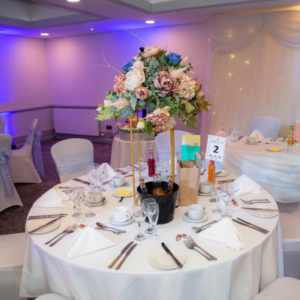
For someone living with a severe traumatic brain injury, attending a family wedding can involve challenges that many of us would never need to consider.
For one of our clients, being able to attend her daughter’s wedding became an important rehabilitation and quality of life goal. It was a goal first identified with her family more than a year before the wedding and one that brought together her family, case management team, multidisciplinary team and wider professionals.
The result was a very special day and an important reminder of what can be achieved when rehabilitation focuses on the things that really matter to an individual.
When AKA Case Manager Catherine Watkins first met the client more than 12 months ago, she was living in a supportive, non-specialist care home and had not received therapy or rehabilitation interventions for around five years.
The client has a severe traumatic brain injury and is unable to independently communicate her needs, emotions and aspirations. Developing a strong relationship with her family was therefore particularly important in understanding what was meaningful to her and how rehabilitation could enhance her quality of life.
One of the family’s biggest concerns was her daughter’s forthcoming wedding. Could she attend? And, importantly, could this be achieved in a way that enabled her to enjoy and participate in the occasion without placing additional pressure on her daughter and husband on such an important family day?
Attending the wedding became a shared goal, agreed with the client and her family and incorporated into the wider rehabilitation approach.
Achieving that goal required considerable collaboration and planning.
Over the months leading up to the wedding, professionals from case management, occupational therapy, speech and language therapy, music therapy, neuropsychology and physiotherapy all contributed.
The work went far beyond the practicalities of simply getting the client to the venue.
The team worked to scaffold her memory, communication, choice-making and emotional expression so that she could engage with the idea of the wedding beforehand and, importantly, continue to engage with memories of the occasion afterwards.
At the same time, there were numerous practical considerations. Transport, wheelchair positioning, accommodation, staffing, personal care, equipment hire, and fatigue management all had to be carefully planned.
Funding and approval also needed to be coordinated, with the legal and financial deputyship team at Irwin Mitchell supporting the plans.
Occupational Therapist Suzi Kerrell Vaughan from Rehabilitate Therapies played a particularly significant role in finding practical solutions to many of these challenges, working closely with Catherine and the wider team.
Careful preparation meant the wedding day itself could be structured around the client rather than expecting her to fit around the event.
A room was arranged at the venue, even though she was not staying overnight. This provided somewhere private for personal care as well as a quiet space where she could rest and manage fatigue. A mobile hoist and suitable vehicle were organised, appropriate staffing was in place, and the day was carefully paced.
This enabled the client to attend the ceremony before having a break. She could then join the photographs, rest again, attend the wedding meal and later take part in the early evening celebrations. She even made it onto the dance floor in her wheelchair.
Rather than expecting her to manage an entire wedding day, the team created the conditions that allowed her to participate in the important moments while responding to her individual needs throughout.
The work has continued since the wedding. Photographs are being used to support the client’s memory and communication, helping her revisit an occasion in which she was an active participant alongside her daughter, husband and wider family.
But perhaps one of the most important outcomes is what the experience has shown everyone about what might be possible in the future.
For someone with a severe disability, rehabilitation is not only about clinical progress. It’s also about participation, relationships, enjoyment, identity and having opportunities to experience the things that give life meaning.
Successfully achieving this client-centred goal has opened conversations between the family and multidisciplinary team about other events and experiences that may now be possible.
The wedding may have been one day, but the ambition behind it is much bigger: helping the client continue to live a meaningful and enjoyable life after severe brain injury.
It’s a powerful example of what can happen when a client’s priorities remain at the centre and everyone around them works together to find a way forward.