

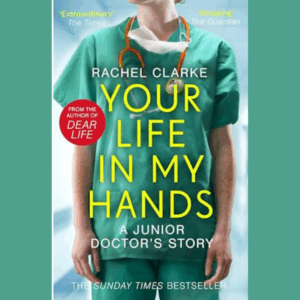
Author: Rachel Clarke
Publisher: Metro Books
Year of Publication: 2020
Number of Pages: 296
Price: £8.99
Although this book centres on the experiences of a junior doctor, its themes will resonate with professionals working in brain injury and complex case management. Rachel Clarke’s transition from journalism to medicine may particularly resonate with case managers who have changed career paths after discovering a passion for healthcare.
It recounts Clarke’s time as a junior doctor, primarily during 2015 and 2016. It is rich with patient stories and reflections on the challenges of working long hours in an overstretched system.
The book opens with Clarke’s brief account of her career in journalism and her decision to retrain as a doctor. From her first day as a junior doctor, Clarke describes the immense responsibility placed on her shoulders and the relentless pace of hospital life. The narrative paints a vivid picture of an NHS under strain, where staff are stretched thin but still strive to offer compassionate care.
A substantial part of the book delves into the political turmoil of the time, particularly the junior doctors’ strike. Clarke offers a compelling account of how junior doctors, including herself, sought to challenge the political narrative and highlight the realities of staff shortages and unsustainable working conditions.
This book is highly engaging regardless of whether the reader is a clinician. Clarke’s perspective offers a much-needed depth, especially in showing how social media became a tool for both political messaging and grassroots mobilisation among doctors.
One challenge I encountered was the book’s non-linear structure. The narrative jumps between time periods, making it occasionally difficult to track Clarke’s training status during specific events.
Though focused on junior doctors, the book is relevant to case management. Clarke eloquently explores themes such as kindness, callousness, wonder, and candour. Some qualities are central to our work in case management; others we would never provide to our clients.
Clarke’s account underscores that while kindness is a universal aspiration in healthcare, it can be compromised by systemic pressures. This reinforces the importance of ensuring that case managers have the resources and time to offer truly compassionate care.
The book also highlights the value of multidisciplinary collaboration. The most hopeful patient stories are those where diverse teams, clinicians, technicians, and support staff work together to deliver excellent care. This mirrors the collaborative approach we take in case management for individuals with complex needs.
Your Life in My Hands offers a profound insight into the life of a junior doctor, capturing both the triumphs and the heartbreaks of patient care. The political context is essential to understanding the challenges faced by NHS staff, many of which persist today. This book is a worthwhile read for anyone, clinician or not, who wants to better understand the human side of healthcare.